[Access]
[Google Map]
Soft opening: 15:00-17:00, Thursday, 4 September, 2026
ASAKUSA, a curator-run project space housed in a renovated traditional wooden building, has been dedicated to collaborative curatorial practices and critical dialogue since its founding in 2015. Located in Asakusa, Tokyo—a culturally vibrant neighborhood, it has presented experimental programs by artists and scholars from Japan and abroad that engage with social issues, including the geopolitical complexities, especially of East Asia. Each program has been developed by a small, project-based team assembled for the occasion. For the 16th Gwangju Biennale, ASAKUSA proposes a pop-up pavilion that resituates itself within the Yangnim Culture Spring in Gwangju’s historic district, where the act of crossing national and institutional borders itself becomes a self-reflexive curatorial proposition.
Across moving images, photography, comics, diaries, and letters, the exhibition The Step After the Last Step sheds light on figures and movements who have resisted state sovereignty in the midst of historical upheaval—anarchists, counter-hegemonic thinkers, those who navigate within the division, and those cultivating the alternative space for knowledge production—questioning how social categories, such as gender, sexuality, and class, intersect with labor, accessibility of choice, and conditions of mobility.
The exhibition brings together artists—Heidrun Holzfeind, Tomoko Kikuchi, Marina Lisa Komiya, Jooyoung Lee, and Yoshiko Shimada—whose practices challenge how historical forms of domination, conflict, division, and amnesia in the modern political and social power structures persist as latent forces within everyday life, as ghostly residues in the present.
In the ASAKUSA Pavilion, border-crossing experiences and queer lives that have not been sufficiently preserved in official records reverberate as the narratives of 'illegible beings' within the exhibition space of Gwangju—a pivotal site of the minjung (people's) movement.
This project was initiated by a four-member curatorial team comprising Koichiro Osaka and Mariko Mikami of ASAKUSA, together with co-curators Miwa Negoro and Mika Maruyama. It is being realized through the team’s equal contributions of unpaid labor and personal savings, as well as through the resources provided by the participating artists. If you support the aims of the exhibition and would like to contribute to its realization, we warmly invite you to make a donation here: Support ASAKUSA Pavilion: https://asakusapavilion-gb16.stores.jp/
Participating Artists
Heidrun Holzfeind (born 1972 in Lienz; based in Berlin and Vienna) is an artist and filmmaker based in Berlin. She studied at the Academy of Fine Arts in Vienna and at Cooper Union in New York. She is interested in how architecture interacts with people’s everyday life. Her works question immanent architectural and social utopias and explore the relationships between history and identity, individual histories and political narratives of the present.
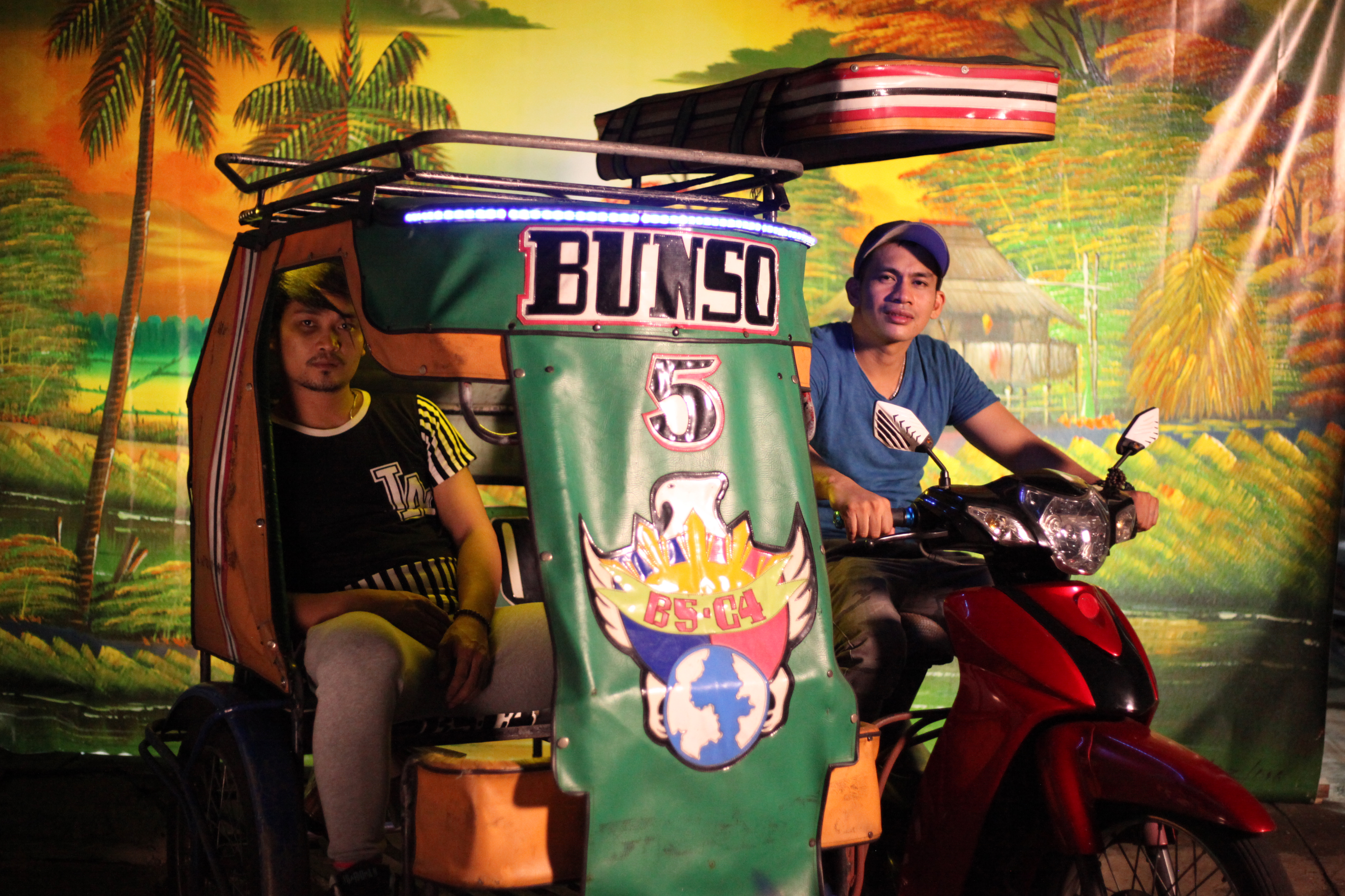
Tomoko Kikuchi (Born 1973 in Tokyo; currently based in Tokyo) is an artist, working closely with her subjects—including LGBTQ youth struggling with loneliness and contradictions in the various “gaps” created by rapid modernization, and rural funeral bands led by drag queens. Primarily using photography, she visualizes not only the pressures and contradictions from their surroundings but also the indomitable spirit of people who transcend the boundaries of their inner selves to live authentically.
Marina Lisa Komiya (Born 1992 in Atlanta, lives in Tokyo) is a visual and manga artist. Driven by an interest in new theories of time emerging from a queer perspective, they explore “new methods of reproduction and propagation” through diverse medium, including installations, video, a flower shop, and the queer feminist platform “FAQ?” Their work highlights issues of productivity influenced by technology, the institution of marriage, and physicality. They also work as a manga artist, with published works including Senjo no Hito [On Their Frontlines]” (Leed Publishing).
Jooyoung Lee (Born 1970 in Daegu, lives in Seoul) is an artist whose practice spans installation, video, documentation, and publishing. Her work explores the complex relationships between land and history, often questioning the boundaries between the personal and the public and involving collaborators in projects that directly engage public space. More recently, Lee has turned her attention to the environmental devastation and energy waste caused by unchecked development, expanding her focus to include discarded plants and soil as natural resources.
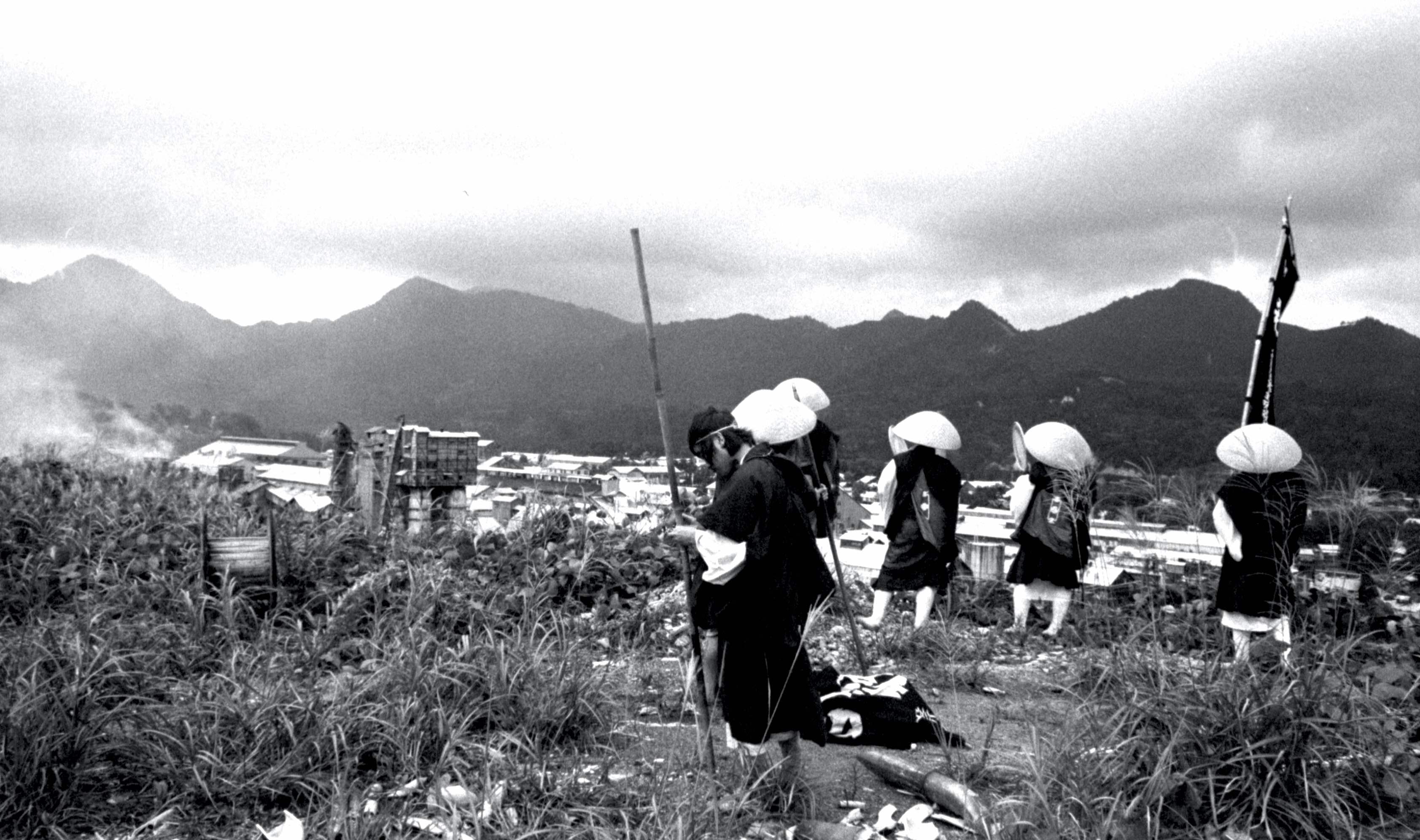
Yoshiko Shimada (born 1959 in Tokyo, lives in Chiba) has critically reexamined Japan's postwar history and gender representations since the early 1990s, presenting works addressing wartime sexual violence and colonialism through themes of feminism, art histories, and war responsibility. Shimada has been collaborating with Bubu de la Madeleine since 1998 and presents their collaborative works, such as Made in Occupied Japan (1998) and Meiji Drag Anti-Imperial Sugoroku (2025), which deconstructed modernization and imperialism with satire.
ASAKUSA, a curator-run project space housed in a renovated traditional wooden building, has been dedicated to collaborative curatorial practices and critical dialogue since its founding in 2015. Located in Asakusa, Tokyo—a culturally vibrant neighborhood, it has presented experimental programs by artists and scholars from Japan and abroad that engage with social issues, including the geopolitical complexities, especially of East Asia. Each program has been developed by a small, project-based team assembled for the occasion. For the 16th Gwangju Biennale, ASAKUSA proposes a pop-up pavilion that resituates itself within the Yangnim Culture Spring in Gwangju’s historic district, where the act of crossing national and institutional borders itself becomes a self-reflexive curatorial proposition.
Across moving images, photography, comics, diaries, and letters, the exhibition The Step After the Last Step sheds light on figures and movements who have resisted state sovereignty in the midst of historical upheaval—anarchists, counter-hegemonic thinkers, those who navigate within the division, and those cultivating the alternative space for knowledge production—questioning how social categories, such as gender, sexuality, and class, intersect with labor, accessibility of choice, and conditions of mobility.
The exhibition brings together artists—Heidrun Holzfeind, Tomoko Kikuchi, Marina Lisa Komiya, Jooyoung Lee, and Yoshiko Shimada—whose practices challenge how historical forms of domination, conflict, division, and amnesia in the modern political and social power structures persist as latent forces within everyday life, as ghostly residues in the present.
In the ASAKUSA Pavilion, border-crossing experiences and queer lives that have not been sufficiently preserved in official records reverberate as the narratives of 'illegible beings' within the exhibition space of Gwangju—a pivotal site of the minjung (people's) movement.
This project was initiated by a four-member curatorial team comprising Koichiro Osaka and Mariko Mikami of ASAKUSA, together with co-curators Miwa Negoro and Mika Maruyama. It is being realized through the team’s equal contributions of unpaid labor and personal savings, as well as through the resources provided by the participating artists. If you support the aims of the exhibition and would like to contribute to its realization, we warmly invite you to make a donation here: Support ASAKUSA Pavilion: https://asakusapavilion-gb16.stores.jp/
Participating Artists
Heidrun Holzfeind (born 1972 in Lienz; based in Berlin and Vienna) is an artist and filmmaker based in Berlin. She studied at the Academy of Fine Arts in Vienna and at Cooper Union in New York. She is interested in how architecture interacts with people’s everyday life. Her works question immanent architectural and social utopias and explore the relationships between history and identity, individual histories and political narratives of the present.
Tomoko Kikuchi (Born 1973 in Tokyo; currently based in Tokyo) is an artist, working closely with her subjects—including LGBTQ youth struggling with loneliness and contradictions in the various “gaps” created by rapid modernization, and rural funeral bands led by drag queens. Primarily using photography, she visualizes not only the pressures and contradictions from their surroundings but also the indomitable spirit of people who transcend the boundaries of their inner selves to live authentically.
Marina Lisa Komiya (Born 1992 in Atlanta, lives in Tokyo) is a visual and manga artist. Driven by an interest in new theories of time emerging from a queer perspective, they explore “new methods of reproduction and propagation” through diverse medium, including installations, video, a flower shop, and the queer feminist platform “FAQ?” Their work highlights issues of productivity influenced by technology, the institution of marriage, and physicality. They also work as a manga artist, with published works including Senjo no Hito [On Their Frontlines]” (Leed Publishing).
Jooyoung Lee (Born 1970 in Daegu, lives in Seoul) is an artist whose practice spans installation, video, documentation, and publishing. Her work explores the complex relationships between land and history, often questioning the boundaries between the personal and the public and involving collaborators in projects that directly engage public space. More recently, Lee has turned her attention to the environmental devastation and energy waste caused by unchecked development, expanding her focus to include discarded plants and soil as natural resources.
Yoshiko Shimada (born 1959 in Tokyo, lives in Chiba) has critically reexamined Japan's postwar history and gender representations since the early 1990s, presenting works addressing wartime sexual violence and colonialism through themes of feminism, art histories, and war responsibility. Shimada has been collaborating with Bubu de la Madeleine since 1998 and presents their collaborative works, such as Made in Occupied Japan (1998) and Meiji Drag Anti-Imperial Sugoroku (2025), which deconstructed modernization and imperialism with satire.
Related Events
Soft Opening
A soft opening will be held with the artists and curators present.
Date and time: Friday, August 4, 2026, 15:00-17:00
Venue: Yangnim Culture Spring, 30 Seoseopyeong-gil, Nam-gu, Gwangju, South Korea
Exhibition
ASAKUSA Pavilion in Gwangju Biennale: The Step After the Last Step
5 September - 15 November, 2026
10:00-17:00 *Closed on Mondays, September 24-26 and October 9, 2026
Venue: Y angnim Cultural Spring, 30 Seoseopyeong-gil, Nam-gu, Gwangju, South Korea
Artist: Heidrun Holzfeind, Tomoko Kikuchi, Marina Lisa Komiya, Jooyoung Lee, Yoshiko Shimada
Curation: ASAKUSA Pavilion in Gwangju Project Team Maruyama, Miwa Negoro)
With support of: Gwangju Biennale Foundation, AEDIT Co., Ltd./ Atsushi Fukai, Land Kärnten
In cooperation with Mai Endo, Taichi Moriyama
Special Thanks to Aya Momose, Steve Seongmin, Ju, Lim Kyung Yong, Sanghyeok Lee, Kyungrim Lim Jang, Asako Shiraki, Makiko Watanuki, Koyo Yamashita,Gamze Baktir
This exhibition is a part of Gwanju Biennale Pavilion 2026
Curators
Koichiro Osaka is a curator, art writer, and founding director of ASAKUSA. Most recently, he organised the curatorial symposium YANARI in collaboration with the Seoul Museum of Art and the Seoul Mediacity Biennale (Tokyo Photographic Art Museum , 2025). Osaka holds a BA in Art Criticism and Curation and an MA in Socially Engaged Performance from Central Saint Martins, University of the Arts London. He is currently a PhD candidate Comparative Asian Studies at the National University of Singapore.
Mariko Mikami is a producer and curator based between Tokyo and Düsseldorf. Her practice engages with the longing for and friction with other cultures; the changes through crossing borders; the creation, circulation, and reception of artworks; and the labour and institutional structures that surround them. She works across exhibition-making, production, translation, editing, and research, contributing to artist-centered projects with festivals and institutions in Japan and internationally. Since joining ASAKUSA in 2017, she has produced artworks and curated exhibitions with artists invited to Tokyo. She holds an MA in Comparative Literature and Culture from the University of Tokyo.
Miwa Negoro is a curator and researcher based in Vienna and Berlin. Her work spans exhibition-making, artistic research, editorial work, and translation, with a focus on the discourse of performativity, decolonial thinking, modernity, and the re-narration of histories. Her writing also explores the intersection of gender, feminism, and architecture. She is an editorial manager at AWARE: Archives of Women Artists Research & Exhibitions and was a curatorial board member of OnCurating Project Space in Zurich in 2019–2021.
Mika Maruyama is a curator, writer, and editor based between Vienna and Matsumoto/Tokyo. Her practice explores the intersections of anarchafeminism, queer feminist practices, and media culture through a range of collective and interdisciplinary projects, with a particular focus on exhibition-making and zine publishing. In 2018, she co-founded Multiple Spirits, an art zine and research platform, with Mai Endo. Since 2020, she has served on the board of the Association of Austrian Women* Artists (VBKÖ).
Soft Opening
A soft opening will be held with the artists and curators present.
Date and time: Friday, August 4, 2026, 15:00-17:00
Venue: Yangnim Culture Spring, 30 Seoseopyeong-gil, Nam-gu, Gwangju, South Korea
Exhibition
ASAKUSA Pavilion in Gwangju Biennale: The Step After the Last Step
5 September - 15 November, 2026
10:00-17:00 *Closed on Mondays, September 24-26 and October 9, 2026
Venue: Y angnim Cultural Spring, 30 Seoseopyeong-gil, Nam-gu, Gwangju, South Korea
Artist: Heidrun Holzfeind, Tomoko Kikuchi, Marina Lisa Komiya, Jooyoung Lee, Yoshiko Shimada
Curation: ASAKUSA Pavilion in Gwangju Project Team Maruyama, Miwa Negoro)
With support of: Gwangju Biennale Foundation, AEDIT Co., Ltd./ Atsushi Fukai, Land Kärnten
In cooperation with Mai Endo, Taichi Moriyama
Special Thanks to Aya Momose, Steve Seongmin, Ju, Lim Kyung Yong, Sanghyeok Lee, Kyungrim Lim Jang, Asako Shiraki, Makiko Watanuki, Koyo Yamashita,Gamze Baktir
This exhibition is a part of Gwanju Biennale Pavilion 2026
Curators
Koichiro Osaka is a curator, art writer, and founding director of ASAKUSA. Most recently, he organised the curatorial symposium YANARI in collaboration with the Seoul Museum of Art and the Seoul Mediacity Biennale (Tokyo Photographic Art Museum , 2025). Osaka holds a BA in Art Criticism and Curation and an MA in Socially Engaged Performance from Central Saint Martins, University of the Arts London. He is currently a PhD candidate Comparative Asian Studies at the National University of Singapore.
Mariko Mikami is a producer and curator based between Tokyo and Düsseldorf. Her practice engages with the longing for and friction with other cultures; the changes through crossing borders; the creation, circulation, and reception of artworks; and the labour and institutional structures that surround them. She works across exhibition-making, production, translation, editing, and research, contributing to artist-centered projects with festivals and institutions in Japan and internationally. Since joining ASAKUSA in 2017, she has produced artworks and curated exhibitions with artists invited to Tokyo. She holds an MA in Comparative Literature and Culture from the University of Tokyo.
Miwa Negoro is a curator and researcher based in Vienna and Berlin. Her work spans exhibition-making, artistic research, editorial work, and translation, with a focus on the discourse of performativity, decolonial thinking, modernity, and the re-narration of histories. Her writing also explores the intersection of gender, feminism, and architecture. She is an editorial manager at AWARE: Archives of Women Artists Research & Exhibitions and was a curatorial board member of OnCurating Project Space in Zurich in 2019–2021.
Mika Maruyama is a curator, writer, and editor based between Vienna and Matsumoto/Tokyo. Her practice explores the intersections of anarchafeminism, queer feminist practices, and media culture through a range of collective and interdisciplinary projects, with a particular focus on exhibition-making and zine publishing. In 2018, she co-founded Multiple Spirits, an art zine and research platform, with Mai Endo. Since 2020, she has served on the board of the Association of Austrian Women* Artists (VBKÖ).